

Discover the Best Marrakech Excursions — Day Trips & Adventures from Jemaa el-Fnaa
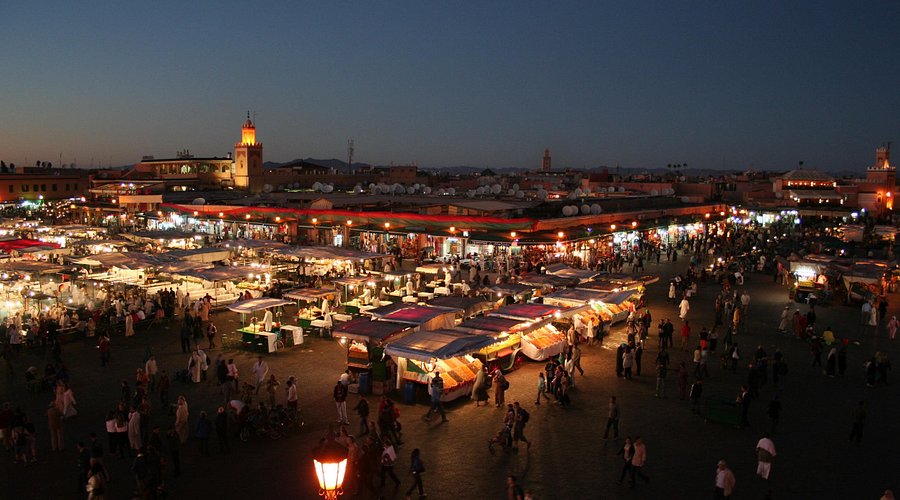
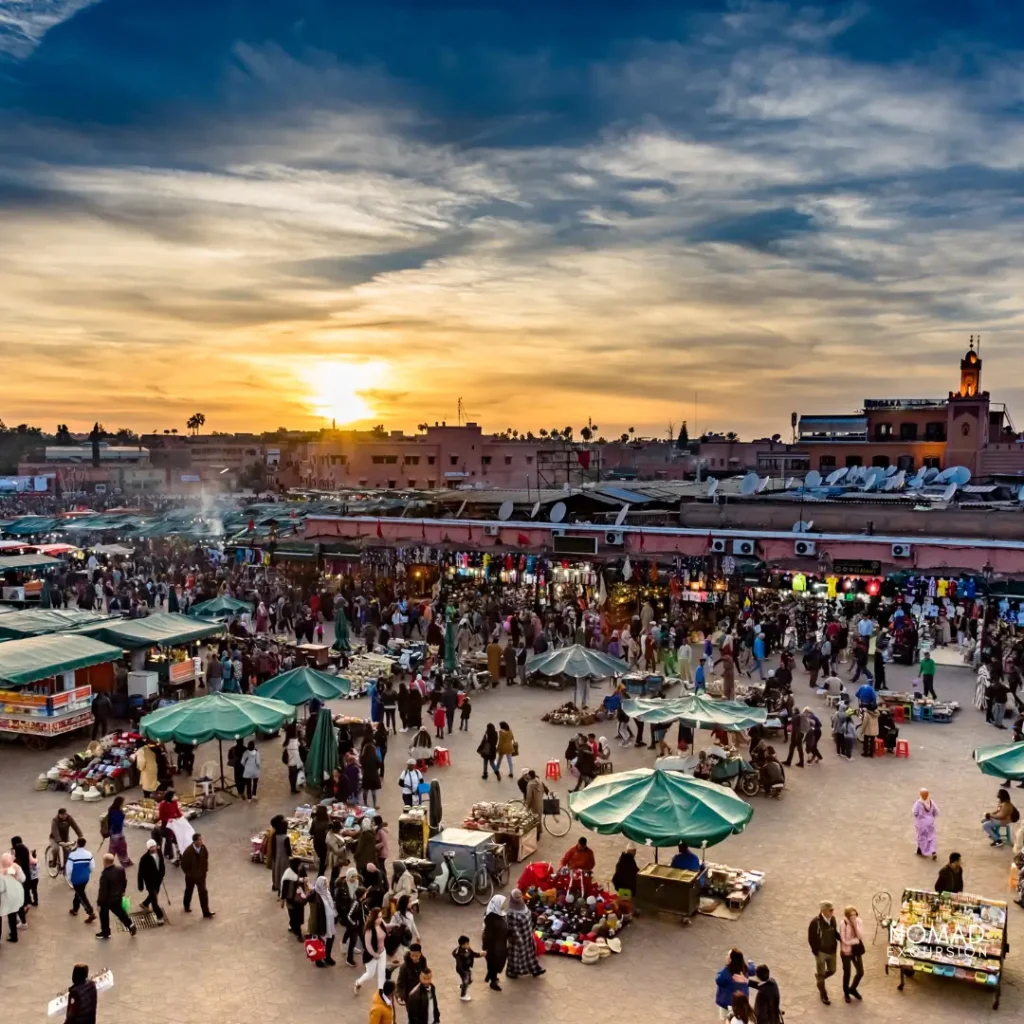
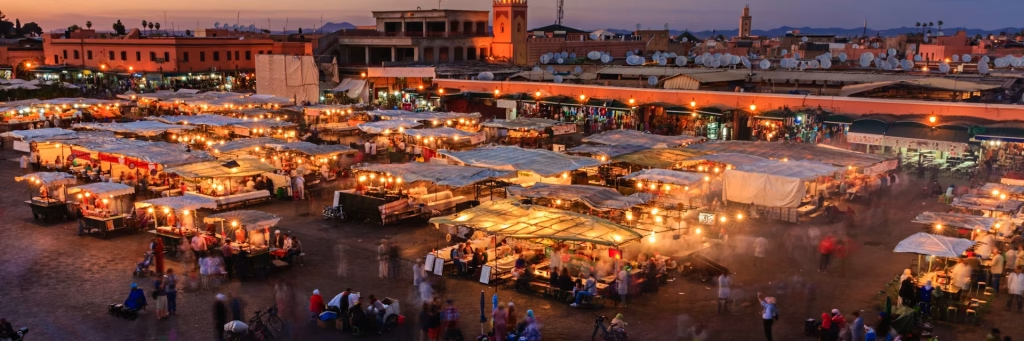
Marrakech hums with an energy you can feel in your chest the moment you step from a shaded riad into the sunlit chaos of Jemaa el-Fnaa. The square is both a beginning and an ending: a place where day trips begin with a coffee, where the smell of spices and smoke lingers on your clothes long after you return, and where the maze of souks funnels you back to a hundred small departures. Using Jemaa el-Fnaa as your practical rendezvous point makes planning simple — many drivers, guides and tour operators are used to meeting guests there, and it’s a perfect reference for pick-ups and drop-offs. But beyond the immediate sensory overload of the old city, Marrakech sits at a crossroads of landscapes: in less than a day you can exchange the heat and noise for a lunar stone plain, a windblown Atlantic town, a flowing mountain valley, or a cinematic earthen fortress that seems to have been lifted from a film set. This guide is written to help the reader — whether a solo traveler, family, or small group — pick the trip that matches their mood for the day: adrenaline and dust, quiet mountain air, coastal winds and seafood, or slow cultural immersion among clay walls and narrow alleys. Below, each section dives into a single excursion (distance/time expectations included), explains what to expect, suggests activities and explains how to make the most of the return to Jemaa el-Fnaa at night, when the square once again becomes the city’s living room.
Agafay Desert — rocky, close and perfect for an afternoon escape
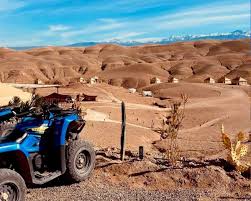
If you want desert feelings without the long drive to the Sahara, Agafay is Marrakech’s go-to: around 30–40 km southwest of the city and typically a 45- to 60-minute drive, Agafay offers a stone desert with dramatic, sculpted plains and dry riverbeds instead of the rolling sand dunes of Erg Chebbi. Because the terrain is compact and raw, it’s ideal for short-format adventures that still scratch the itch for wide horizons: buggy tours that let you scream across ridges and dips, quad biking that leaves a satisfying trail of dust behind you, and quieter camel rides for a slightly more traditional vibe. Many operators combine adrenaline with calm — a morning buggy run to catch soft light for photos, or an afternoon tour timed for sunset, followed by mint tea and local snacks in a Berber tent — so you can balance thrills with cultural moments. Practical tip: the desert’s stone surface is abrasive; closed shoes, sunglasses and a scarf for dust are wise. For curious photographers, the harsher geology of Agafay gives a filmic, almost lunar backdrop to portraits and silhouette shots; it’s an especially flattering place for golden hour. If you’re short on time but crave the ‘out-of-city’ feeling, Agafay is the perfect half-day option — expect to be back in Jemaa el-Fnaa for dinner if you leave mid-afternoon. Practical logistics are simple: most tours will collect you at the riad or the square and handle transfers, equipment and refreshments so you only need to bring a sense of adventure and a good camera. Marrakech Desert Trips
Aït Ben Haddou — the earthen fortress that every history lover should see
There are places in Morocco that feel like memory made real; Aït Ben Haddou is one of them. This ancient ksar — a fortified village built in earthen clay and constructed along an old caravan route — is a UNESCO World Heritage Site and a living textbook of southern Moroccan architecture, with towers, narrow lanes and ochre clay façades that glow at sunrise and burn gold at sunset. It’s roughly 3.5 hours from Marrakech by car, and the route itself (often via the Tizi n’Tichka pass over the High Atlas) is part of the experience: wind through mountain switchbacks, taste the changing light and watch the landscape convert slowly from terraced fields into the more arid, cinematic valleys that surround the ksar. Aït Ben Haddou is both an archaeological treasure and a modern cultural landmark — you’ll recognize its skyline from films and series shot there — and a guided visit will add color, names and dates to the clay walls you’ll wander through. Walk the narrow streets, climb watchtowers for expansive views, and don’t miss the small museum and the chance to meet the families who still inhabit parts of the ksar. For photographers and film fans, dawn or dusk is when the village sings; for culture seekers, a guided walkthrough (or a local guide met in a nearby village) will unspool centuries of caravan life, architectural techniques and the social rhythms that shaped life here. Since Aït Ben Haddou is one of Morocco’s best known UNESCO listings, it’s wise to book ahead during high season, and a typical day trip includes at least one stop en route (many tours stop at Telouet’s dramatic kasbahs) so plan for a full day out of Marrakech. Centre du patrimoine mondial de l’UNESCO
Essaouira — Atlantic air, blue doors and the slow rhythm of the sea
If you need contrast, Essaouira delivers it spectacularly: in roughly 2.5 hours on a comfortable coastal road you’ll move from Marrakech’s hot red city to a breezy Atlantic town of whitewashed houses and cobalt shutters. Essaouira’s medina, fortifications and harbor are compact enough to explore in a day but rich enough to feel like a true escape — art galleries, craft workshops focused on thuya wood and silver, a working fish market where the catch is grilled on the spot, and long beaches where surfers and kitesurfers make their own skyline. The town’s maritime climate cools things down nicely; a seaside lunch of fresh fish and a stroll along the ramparts provide a complete mood change from Marrakech’s souks. Travel tip: plan your schedule around the tide and the wind if you want to swim or kite; if you simply want to breathe and photograph, late morning to mid-afternoon is a good window. Many tours include a stop at an argan cooperative on the way — a short, scenic detour where you can learn how argan oil is made and buy artisanal products that support local women’s cooperatives. For a day trip, Essaouira’s pace is refreshingly slow compared to Marrakech’s intensity: think long lunches, browsing artisan shops, and a late afternoon return to the red city to watch Jemaa el-Fnaa come alive at dusk. Explore Essaouira
Ourika Valley — a green escape and a taste of mountain life
Less than an hour from Marrakech (depending on your exact start point and traffic), the Ourika Valley is the nearest green lung for city dwellers — rivers, terraced fields, and the kind of village life that feels resolutely out of time. Hiking trails lead to the Setti Fatma waterfalls and beyond, dotted with small cafés that hang over the river and tables where tagines and mint tea are the evening rituals. If your day is about nature and conversation rather than speed and spectacle, Ourika offers both gentle walks and longer treks to remote waterfalls; local guides are plentiful and extremely useful for reading the landscape and arranging a visit to a Berber household for tea and stories. Practical note: the higher you climb to visit multiple cascades, the cooler and more rugged the route becomes — good shoes and water are essential. For families, the valley offers shaded picnic spots and shallow pools where kids can paddle; for photographers who love green and water, the contrast with Marrakech’s ochres is a refreshing palette swap. Because Ourika is so manageable as a half-day or full-day trip, it’s a flexible choice for travelers who want an easy escape from the city’s heat while remaining close enough to be back for an evening in Jemaa el-Fnaa. The Guardian
Ouzoud Waterfalls — big water, wild monkeys and a day in cool mist
If you want to spend a full day outdoors and be rewarded by scale and spectacle, Ouzoud may be your best day trip from Marrakech. Located roughly 150–180 km northeast of the city, the falls drop dramatically into a lush canyon and create constant rainbow mist on sunny days; the cliffs are ringed with restaurants where you can sit with a tagine and watch the water and the macaque monkeys that live in the trees. Hiking paths let you descend to multiple viewpoints and even take a small boat ride that brings you nearer to the cascades; because the site is spread out, plan for at least a full day away from Marrakech so you can hike at a relaxed pace and eat without rushing. Families and photographers love Ouzoud because it’s cinematic in scale and generous in viewpoints — but be mindful of the monkeys: they are wild animals; admire them from a distance and don’t feed them. Logistics are straightforward: many operators sell day tours including a driver, a local guide at the falls, and lunch in a nearby restaurant, which leaves you free to enjoy a slow, wet, musical day surrounded by olive groves and cliffside cafés. expedia
A lesser-known treasure in the medina — the Almoravid Koubba (Almoravid Qubba)
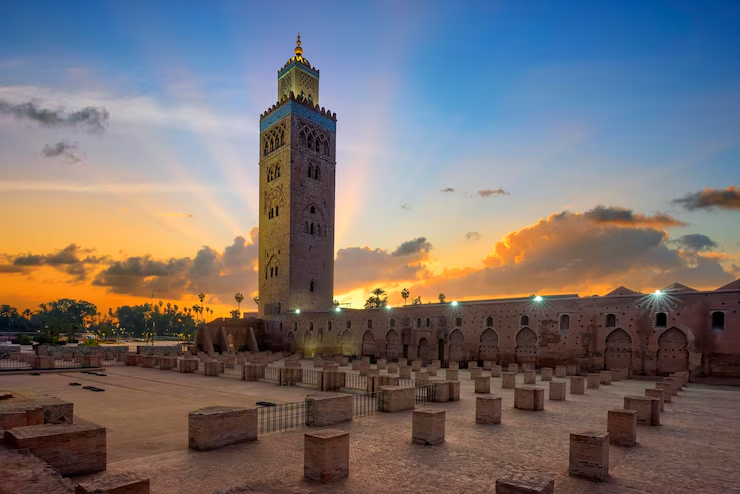
When travelers ask for something “off the beaten track” inside Marrakech itself, many guidebooks point out the city’s well-known museums and shops — but fewer mention the Almoravid Koubba (also spelled Qubbat al-Murabitin or Qubbat al-Ba’adiyin), a tiny, extraordinary relic of the city’s deeper past that sits quietly, easy to miss, within the medina’s woven streets. This domed ablution structure dates back to the early 12th century and is one of the few surviving examples of Almoravid architecture in the city: its carved stucco and ancient dome hint at a lost religious complex and a sophisticated water system. The Koubba was originally part of a mosque used for ritual washing before prayer and showcases an architectural vocabulary — arches, arabesque motifs and early Islamic decorative techniques — that you won’t easily find elsewhere in Marrakech. Because it is small and tucked away, many visitors overlook it, which makes it a priceless detour for history lovers who want to see a palpable link to the city’s formative centuries without the crowds. A short, reverent visit rewards you with a sense of time’s layers stacked one atop the other: Roman and Berber infrastructure gave way to Almoravid and later dynasties, each leaving an imprint on the carnelian walls of Marrakech. If you like architecture, the Koubba is the sort of quiet, intense place that changes the way you look at the city’s sandstone façades — you’ll return to Jemaa el-Fnaa noticing doorways .
Conclusion — Returning to Jemaa el-Fnaa: The Heartbeat of Every Journey
No matter which direction you choose — west toward the sea, east toward waterfalls, or south into the desert — every excursion from Marrakech eventually loops back to Jemaa el-Fnaa, where it all began. Returning to the square at night, you’ll find it transformed: storytellers take over where juice vendors stood that morning, smoke rises from grill stalls, and the hum of drums and chatter fills the air. This rhythm — the daily outward journey and the nightly return — is part of what makes Marrakech so magnetic. It’s a city that both propels you outward into Morocco’s wild beauty and pulls you back into its own pulsing center.
Whether you spent your day chasing dust trails through Agafay, following waterfalls in Ouzoud, or tracing history’s fingerprints in Aït Ben Haddou or the Almoravid Koubba, each trip adds a new layer to your understanding of what Marrakech truly is: not just a city, but a living gateway to landscapes, stories and human warmth.
Before you plan your next adventure, take one more slow walk through Jemaa el-Fnaa — maybe with a glass of fresh orange juice or a bowl of snail soup — and let the sounds and smells remind you why every road in Morocco, somehow, leads back here.The Guardian – Exploring Morocco’s Valleys and Mountains
Frequently Asked Questions (FAQ)
Q1: What’s the easiest day trip from Marrakech for first-time visitors?
👉 The Agafay Desert — it’s close, scenic, and offers a mix of adventure and comfort in just half a day.
Q2: Can I visit both Aït Ben Haddou and Ouarzazate in one day?
👉 Yes, but it’s a long drive (7–8 hours round trip). Many travelers prefer to stay overnight in Ouarzazate for a slower pace.
Q3: Is Essaouira worth a day trip or should I stay overnight?
👉 A day trip gives a taste, but an overnight stay lets you enjoy the sunset, the music scene, and quieter early mornings.
Q4: Are the Ouzoud Falls safe for families with kids?
👉 Absolutely, but watch footing near slippery paths and keep an eye on curious monkeys.
Q5: How do I find the Almoravid Koubba?
👉 It’s near the Ben Youssef Madrasa in the medina — ask locals for “Qubbat al-Murabitin” or follow medina signs. Entry is inexpensive and the site is rarely crowded.